Contact us
 +34 722 619 284


 Español
 Français
 Deutsch
 Italiano
 Português PT
 Română
 Polski
 Nynorsk
 Українська
 Nederlands
 Svenska
 Čeština
 български език
 ελληνικά
 Magyar
 Eesti keel
 Slovenščina
 Latviešu valoda
 Català
 Galego
 Euskera
 Русский
 Türkçe
Battery Operated Irrigation Timers
Take control of your crop with our **battery-operated irrigation timers**. The perfect solution to automate watering in your grow tent or garden without needing electrical outlets. Save time, improve your yield, and gain freedom.
 Play Text to Audio

The first things I’d ask you before recommending a timer
Look, I know you just want to set it up and forget about the watering can, but before you pick one, we need to look at your setup. Where are you getting the water from? If you are connecting directly to a tap with pressure, almost any model here will work wonders. But if you are working with a raised tank (gravity irrigation), you need to make sure the timer’s solenoid valve opens with low pressure.
Another key point: How precise do you need to be? If you are growing in soil, you might just need a daily soak. But if you are working with coco coir or hydroponic mediums, you might need multiple short waterings a day. Knowing this changes everything.
Based on your answers, this is what makes sense for you
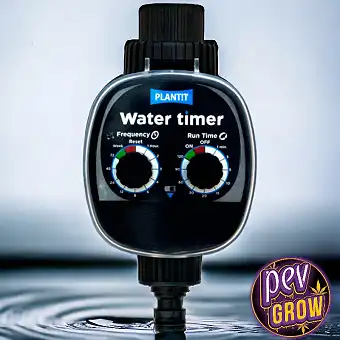
If you are the type of grower who hates complications and just wants to keep the plants alive while you’re at work, an analog timer is your best friend. Two wheels: frequency and duration. Done. It’s robust and rarely fails.
Now, if you are dialing in a high-yield crop in your grow tents 100X100 and you need to water exactly 2 minutes every 6 hours to maximize nutrient uptake, you need a digital timer. These bad boys let you program specific days, skip days, and set exact intervals, giving you total control over the wet-dry cycle.
Benefits of getting this category right the first time
Choosing the right battery timer isn't just about saving time; it's about consistency. Humans forget, get lazy, or get busy. A timer doesn't. This consistency reduces stress on the plant, preventing those ups and downs in humidity that can lead to problems.
Plus, the obvious one: Freedom. You can finally go away for the weekend without asking your neighbor to water your girls (and risking them finding out about your hobby). It’s the cheapest insurance policy for your harvest.
Honest tips you don’t usually see on a product page
Here is the real talk. Battery timers are awesome, but batteries die. Always buy high-quality alkaline batteries and check them before a long trip. Also, if you are using heavy organic nutrients, be careful. The internal mechanisms can get clogged if the nutrient solution is too thick or has particles. In those cases, a simple filter before the timer saves you a lot of headaches. If you are looking for something totally different and gravity-fed without electronics, you might even check out Autopot systems, but for standard drip lines, these timers are king.
Frequently Asked Questions about Battery Timers
How long do the batteries usually last?
Usually, a good set of alkaline batteries will last the entire growing season (about 3 to 6 months), but it depends on how often the valve opens and closes. Most models have a low-battery indicator—don't ignore it!
Can I use these timers with a water tank and zero pressure?
It depends on the model. Some require a minimum pressure (like 0.5 or 1 bar) to open the valve effectively. If you are using a gravity tank, look for models specifically designed for zero pressure or ball-valve timers rather than solenoid ones.
Are they waterproof?
Yes, they are designed to be outdoors or in humid grow rooms. However, the battery compartment must be tightly closed. If you have them outside, it’s always a good idea to protect them from direct torrential rain or extreme sun to extend their lifespan.
Among all of you who comment or send us your questions there will be a bimonthly draw for a 50 euros voucher to buy in Pevgrow. What are you waiting for? Write now and participate!