Contact us
 +34 722 619 284


 Español
 Français
 Deutsch
 Italiano
 Português PT
 Română
 Polski
 Nynorsk
 Українська
 Nederlands
 Svenska
 Čeština
 български език
 ελληνικά
 Magyar
 Eesti keel
 Slovenščina
 Latviešu valoda
 Català
 Galego
 Euskera
 Русский
Air Dehumidifiers for Indoor Growing
Is humidity threatening your hard work? Don't risk fungi ruining your harvest. Explore our range of air dehumidifiers, from mini units for small tents to industrial beasts for large rooms. Keep your environment dry and your buds safe.
 Play Text to Audio

The first things I'd ask you before recommending a dehumidifier
Look, I know that buying a dehumidifier isn't as exciting as choosing a new high-yield strain, but believe me: it is the best insurance policy you can buy for your crop. Before you throw the first one you see into the cart, answer these three questions honestly:
- What is the real size of your space? A mini dehumidifier in a large room is like trying to empty the ocean with a spoon. Conversely, an industrial beast in a grow tents 100x100 will turn your plants into dried jerky in hours.
- How high does your relative humidity (RH) spike? Is it just a little high (60%) or is it raining inside your tent (80%+)?
- What is your temperature like? This is key. Most powerful dehumidifiers (compressor-based) generate heat. If your grow room is already an oven, you need to plan your ventilation well.
Based on your answers, this is the gear that makes sense for you
Now that you have the data, let's get to the point so you don't waste money on equipment that falls short or is overkill.
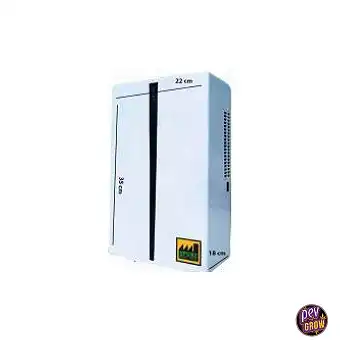
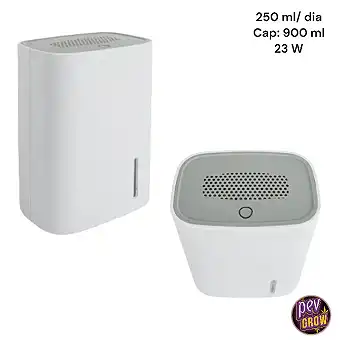
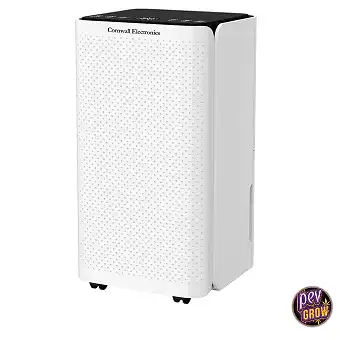
If you are growing in a small closet or a mini tent and your humidity problem is mild, a Mini Dehumidifier (usually Peltier technology) is enough. They are quiet, consume little, and don't generate much heat. But don't expect miracles if you have a jungle in there.
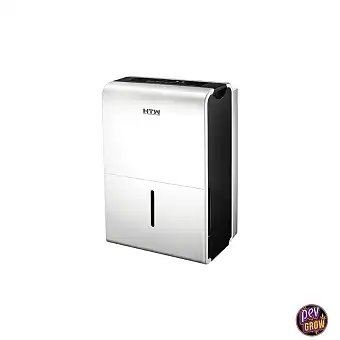
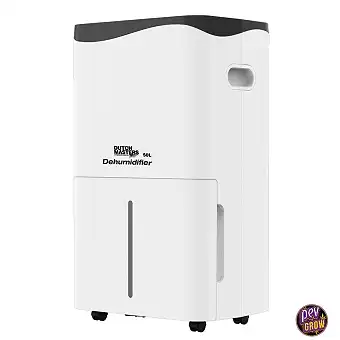
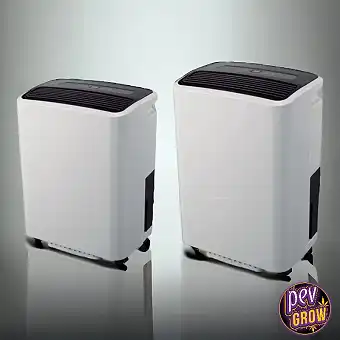
If you have a standard room or a large tent and you are in full flowering, you need a Compressor Dehumidifier (12L/day upwards). These are the workhorses. They suck moisture out of the air fast. Yes, they make a bit of noise and heat, but they guarantee that your buds won't rot.
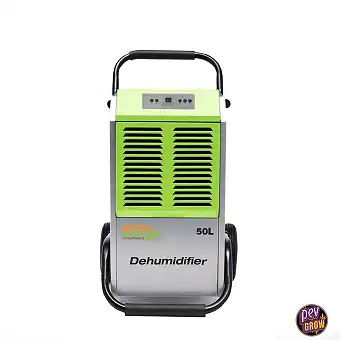
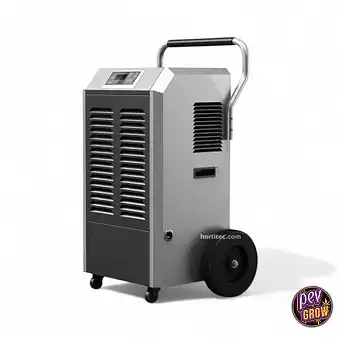
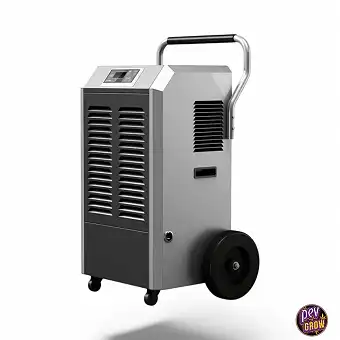
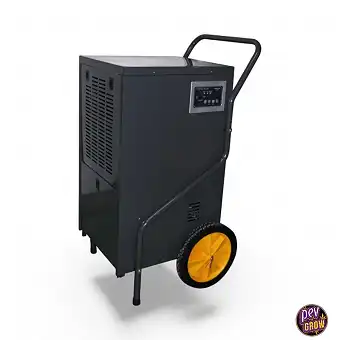
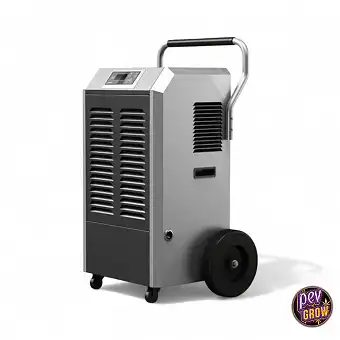
For large rooms, associations, or basements, go straight for an Industrial Dehumidifier. We are talking about machines that remove 50, 60, or more liters per day. This is professional territory to ensure maximum yield.
Benefits of nailing the humidity (besides not crying over mold)
Obviously, the main reason you are here is to avoid the dreaded Botrytis (gray mold) or Powdery Mildew. But controlling humidity brings other joys that you notice in the final quality:
- More resin and density: When the humidity is low during the final weeks, the plant protects itself by producing more trichomes.
- Better nutrient uptake: By optimizing the VPD (Vapor Pressure Deficit), plants drink and eat better.
- Pest control: Many bugs love moisture. Dry air makes their life miserable. If you combine this with good air fans to keep the air moving, you create a fortress against fungi and pests.
Honest tips you don't usually read on the box
Here is the experience speaking, not the manual. First: plan the drainage. If your dehumidifier has a small tank, you will be emptying it twice a day during flowering. If you can, connect a hose to a drain or a larger tank.
Second: Watch the temperature. As I told you, compressor units release heat. In winter it's great, it saves you on heating. In summer... you might need to increase the extraction power or use a cool tube.
And finally, if you have had mold problems in the past, a dehumidifier is step one. Step two is to consider an ozone generator to sterilize the air (always used with caution and outside the tent or in the exhaust), ensuring that no spore survives.
Frequently Asked Questions about Dehumidifiers
What is the ideal humidity for flowering?
Generally, you want to keep it between 40% and 50% during the fattening phase. In the last two weeks, if you can lower it to 35-40%, you will force even more resin production and avoid last-minute scares.
Can I use the water from the dehumidifier to water the plants?
I wouldn't recommend it as a base. Although it has a low EC (it is practically distilled), it can contain traces of metals from the internal coils or bacteria from the tank. It is better to use it for scrubbing the floor or cleaning equipment.
Does a dehumidifier replace the extractor fan?
No, never. The extractor renews the air (brings in CO2, removes heat). The dehumidifier only removes water from that air. They are teammates, not substitutes.
Among all of you who comment or send us your questions there will be a bimonthly draw for a 50 euros voucher to buy in Pevgrow. What are you waiting for? Write now and participate!