Contact us
 +34 722 619 284


 Español
 Français
 Deutsch
 Italiano
 Português PT
 Română
 Polski
 Nynorsk
 Українська
 Nederlands
 Svenska
 Čeština
 български език
 ελληνικά
 Magyar
 Eesti keel
 Slovenščina
 Latviešu valoda
 Català
 Galego
 Euskera
 Русский
 Türkçe
Submersible Water Pumps
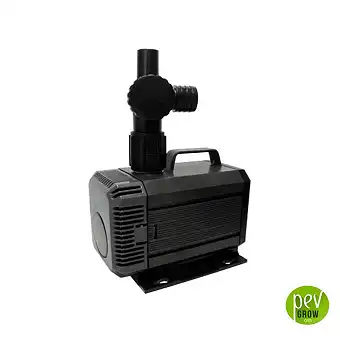
Automate your watering and keep your nutrient solution moving with our selection of submersible pumps. Whether you need to drain a tank or feed a hydroponic system, here you'll find the reliable heartbeat your crop needs.
 Play Text to Audio

The Heartbeat of Your Hydroponic or Irrigation Setup
Let’s be real for a second: are you still hauling buckets of water back and forth like you’re in the Stone Age? If you want to level up your growing game, you need to automate. A high-quality submersible water pump is literally the heart of your operation, pumping life (water and nutrients) to your plants. Whether you are running a complex hydroponic grow kit or just want to set up a simple automatic watering system for your soil pots, these pumps are the workhorses that make it happen.
By keeping your water moving, you aren't just delivering food; you're also oxygenating the mix and preventing that nasty stagnation that leads to root rot. It’s about working smarter, not harder, so you can spend more time chilling and less time breaking your back.
Flow Rate vs. Head Height: The Tech Stuff Made Simple
Okay, don't panic. You don't need a degree in fluid dynamics to pick a pump, but you do need to understand two key concepts so you don't mess up your flow.
- Flow Rate (L/h or GPH): This is simply how much water the pump can move in an hour. A higher number means more water. But bigger isn't always better; you don't want to blast your seedlings with a fire hose.
- Head Height (Max Height): This is the crucial part many growers forget. It refers to how high the pump can push water vertically. If your reservoir is on the floor and your plants are on a table 1.5 meters up, you need a pump with a head height of at least that (plus a bit more for pressure).
If you are mixing hydroponic nutrients in a reservoir, a simple circulation pump with low head height is fine. But if you need to push water through a filter and up to a tray, you need power.
Types of Pumps: Circulation, Irrigation, and Drainage
Not all pumps are created equal. Depending on your mission, you'll need a specific type of gear:
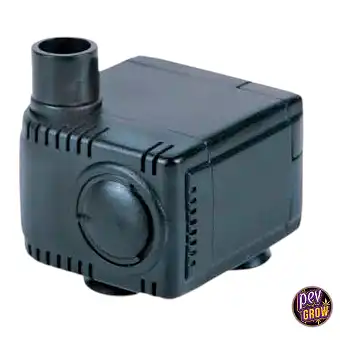
- Circulation Pumps: These are usually smaller and are designed to stay inside the tank just to keep the water moving. They ensure your mix stays consistent and doesn't settle at the bottom.
- Irrigation Pumps: These bad boys have enough pressure to push water through tubes and drippers. They are essential for drip irrigation systems where you need consistent pressure at every nozzle.
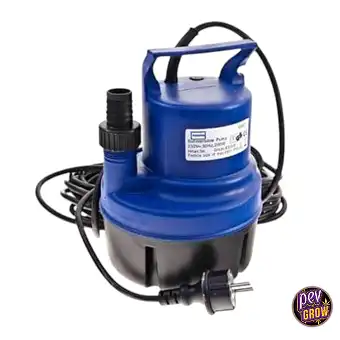
- Drainage/High-Flow Pumps: Need to empty a 200-liter tank in minutes? You need a high-flow pump. These are great for flushing your system or moving large volumes of water quickly.
How to Choose the Right Model for Your Crop
Choosing the right pump depends entirely on your setup size and style. If you have a small closet grow with a few plants, a compact pump like a Micro Jet is perfect—it’s quiet, efficient, and won't heat up your water. For larger rooms or if you are pumping water from a basement to a higher floor, you’re going to need a heavy-hitter with high head pressure.
Pro tip: Always buy a pump that is slightly more powerful than you think you need. You can usually dial the flow down, but you can't make a weak pump stronger. Plus, running a pump at 100% capacity 24/7 wears it out faster. Treat your gear right, and it will take care of your green ladies.
Frequently Asked Questions About Submersible Pumps
Can I run these pumps outside of water?
Generally, no. Most of these pumps are designed to be cooled by the water they are pumping. Running them dry (without water) can burn out the motor in seconds. Always make sure they are submerged before plugging them in.
How often should I clean my pump?
It depends on your nutrients, but a good rule of thumb is once a month. Salts and slime can build up inside the impeller, reducing flow and making it noisy. A quick soak in warm water and vinegar usually does the trick.
Do these pumps make a lot of noise?
Most modern submersible pumps are designed to be very quiet. Since they are underwater, the vibration is dampened. If your pump starts rattling loudly, check if it's touching the side of the tank or if it needs cleaning.
What size tubing do I need?
Check the outlet size of the pump (usually measured in millimeters or inches). Most pumps come with adapters for standard tubing sizes, but always double-check before you buy to avoid leaks.
Among all of you who comment or send us your questions there will be a bimonthly draw for a 50 euros voucher to buy in Pevgrow. What are you waiting for? Write now and participate!