Contact us
 +34 722 619 284


 Español
 Français
 Deutsch
 Italiano
 Português PT
 Română
 Polski
 Nynorsk
 Українська
 Nederlands
 Svenska
 Čeština
 български език
 ελληνικά
 Magyar
 Eesti keel
 Slovenščina
 Latviešu valoda
 Català
 Galego
 Euskera
 Русский
 Türkçe
Reverse Osmosis Systems for Growing
Take full control of your nutrient solution with our **reverse osmosis systems**. Eliminate chlorine, sediments, and unwanted salts to start with a completely pure base (EC 0.0). Ideal for growers who want professional results and zero nutrient lockouts.
 Play Text to Audio

The first things you should ask yourself before buying an osmosis filter
Look, we know that when you get into growing, you focus on the lights and the seeds, but water is the vehicle that carries the food to your plants. If that vehicle is full of trash (chlorine, heavy metals, excess salts), the nutrients won't get there efficiently. Before you throw a filter in your cart, ask yourself these three things:
- What is your tap water actually like? If you live in an area with hard water (high EC), an osmosis system isn't a luxury, it's a necessity. If your water is soft, maybe a simple carbon filter is enough.
- How many liters do you need per day? It's not the same to water a 1x1 meter tent as it is to fill a 500-liter tank. Systems are measured by their capacity in liters per day (L/day) or gallons per day (GPD). Don't fall short, or you'll be waiting hours to fill a bucket.
- What is your water pressure? Reverse osmosis membranes need pressure to work. If you live on a fourth floor with weak flow, you're going to need a kit with a booster pump, or you'll waste a ton of water.
Based on your setup, this is the system that makes sense for you
You don't need a NASA-grade system for a couple of plants, but you don't want a toy filter for a serious room either. Here is the breakdown:
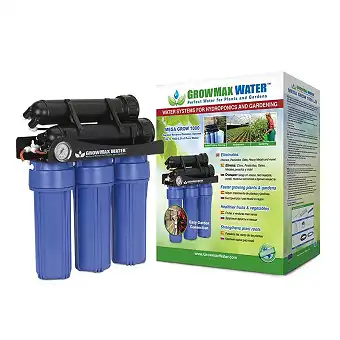
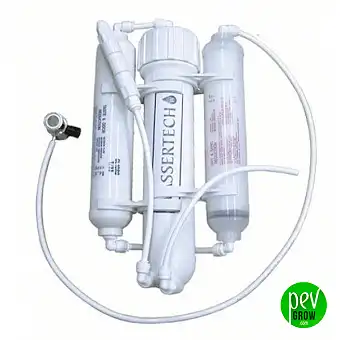
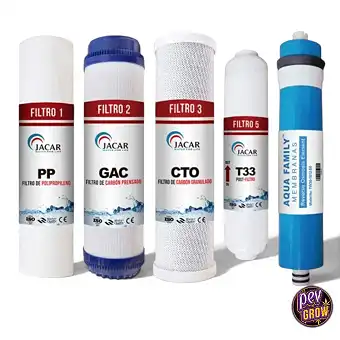
- For the home grower (Small Tent): If you just need to fill a few watering cans, a compact 3-stage system is your best friend. It removes chlorine and sediments without taking up half your bathroom. Connect it with a standard irrigation pipe and you are good to go.
- For the pro or large scale grower: If you are running automatic irrigation or have a large reservoir, go for a high-flow system (500L/day or more). These usually come with better membranes and faster flow rates.
- For those with terrible water pressure: As we mentioned, if the water comes out of your tap like a sad trickle, look for a system that includes a pressure pump. It ensures the membrane works efficiently and you don't waste water.
Why your plants will thank you for starting with EC 0.0
This is where the magic happens. Using osmosis water isn't just about cleaning; it's about control. When you use tap water, you are starting with an EC of maybe 0.4 or 0.8 full of "mystery elements" that your plant doesn't necessarily want.
By using reverse osmosis, you strip everything down to practically zero. This means every single point of EC you add comes from your fertilizers. You know exactly what your plant is eating. This translates to:
- No more nutrient lockouts: Caused by excess salts blocking the roots.
- Healthier roots: Chlorine kills beneficial bacteria; osmosis water protects the micro-life in your substrate.
- Equipment longevity: If you use a grow tent humidifier, using RO water prevents that white dust from coating everything and clogging the device.
Honest tips you don't usually see on a product page
We want you to succeed, so here is the real talk. Reverse osmosis water is empty water. It has no Calcium or Magnesium. If you water with pure RO water without adding these back, your plants will turn yellow and sad very quickly.
You MUST use a supplement like Canna CalMag Agent to bring the EC back up to around 0.4 before adding your base nutrients. Also, keep an eye on the waste water. RO systems produce waste water (brine) for every liter of pure water. Don't just dump it; it's great for scrubbing floors or watering tough outdoor ornamental plants.
Frequently Asked Questions about Reverse Osmosis
Is reverse osmosis water good for all growing mediums?
Yes, absolutely. Whether you are in soil, coco, or hydroponics, starting with pure water gives you maximum control. In hydroponics, it is practically mandatory to avoid pH fluctuations and salt buildup.
Do I really need a pump for my osmosis system?
Not always, but if your tap pressure is below 3 bar (40 psi), the system will be very inefficient (producing a lot of waste water and very little pure water). A pump fixes this instantly.
How often should I change the filters?
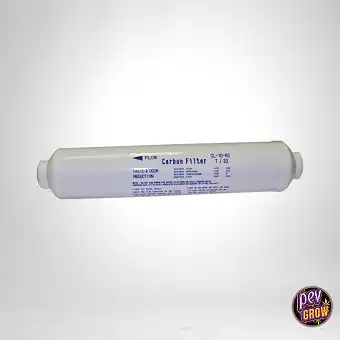
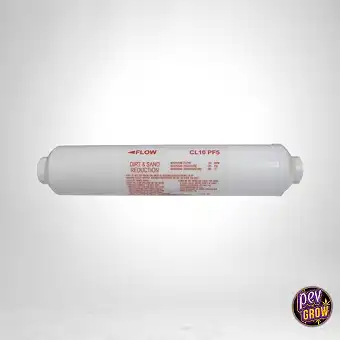
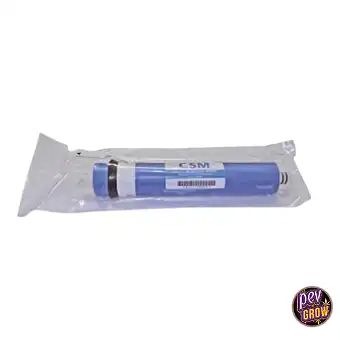
It depends on how bad your tap water is, but generally: change sediment and carbon pre-filters every 6 months. The membrane usually lasts 1 to 2 years. If you notice the EC of your product water rising, it's time to change it.
Can I use RO water with organic nutrients?
Yes, but remember the CalMag rule. Organic nutrients often rely on the soil's buffer, but starting with clean water ensures no chlorine kills the fungi and bacteria that make organics work. You might also want to look into a Regulator by Aptus-Holland to help manage nutrient uptake efficiently.
Among all of you who comment or send us your questions there will be a bimonthly draw for a 50 euros voucher to buy in Pevgrow. What are you waiting for? Write now and participate!