Contact us
 +34 722 619 284


 Español
 Français
 Deutsch
 Italiano
 Português PT
 Română
 Polski
 Nynorsk
 Українська
 Nederlands
 Svenska
 Čeština
 български език
 ελληνικά
 Magyar
 Eesti keel
 Slovenščina
 Latviešu valoda
 Català
 Galego
 Euskera
 Русский
 Türkçe
Complete Hydroponic Grow Kit
Ready to level up your grow? A **Complete Hydroponic Grow Kit** is the shortcut to massive yields and faster harvests. Forget about guessing which pump matches which tube; these systems come with everything you need to start growing like a pro today.



 Play Text to Audio

Why a Complete Hydroponic Kit is the Upgrade Your Plants Are Screaming For
If you feel like your soil grows are hitting a speed limit, you are ready for the next level. Hydroponics isn't just a different way to grow; it's like strapping a turbo engine to your crop. By delivering water and nutrients directly to the roots in a highly oxygenated environment, plants don't have to waste energy searching for food. They just eat, grow, and swell.
The problem? Building a system from scratch can be a nightmare of leaking tubes, mismatched pumps, and trips to the hardware store. That's where a Complete Hydroponic Grow Kit saves your life. We've curated these systems to ensure every component fits perfectly. You get the precision of a laboratory with the simplicity of a LEGO set. Whether you want to beat your personal yield record or just want a system that waters itself while you chill, this is the way to go.
Hydroponics 101: Understanding the Magic Without the Headache
You don't need a PhD in chemistry to run these systems, but you do need to understand three basic pillars: Water, Oxygen, and Nutrition. In a traditional pot, roots struggle through dense dirt. In a hydro kit, roots hang in a medium (like clay pebbles or coco) or directly in water, getting a constant supply of oxygen.
This oxygen explosion is what causes that "scary" growth rate. However, because there is no soil to buffer mistakes, you need to be precise with your food. You will need specific cannabis fertilizers designed for hydro, as they are fully soluble and won't clog your drippers. It's also crucial to keep an eye on the acidity of your water; a couple of reliable PH meters will be your best friends here. If you keep those parameters in check, the system does the heavy lifting for you.
Types of Systems: Gravity vs. Active Irrigation
Not all hydro kits work the same way, and choosing the right one depends on how much you want to be involved.
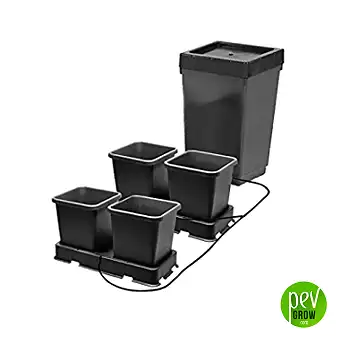
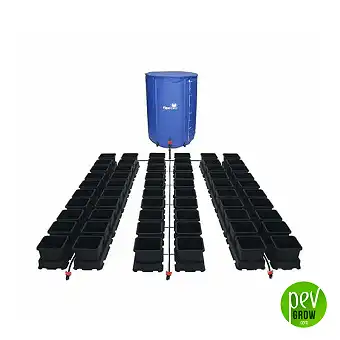
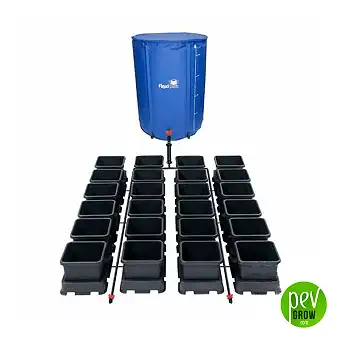
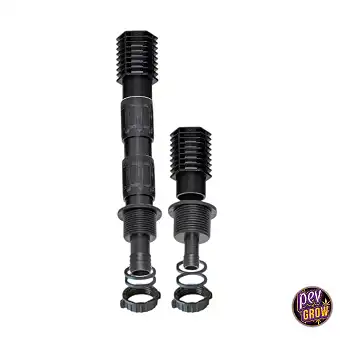
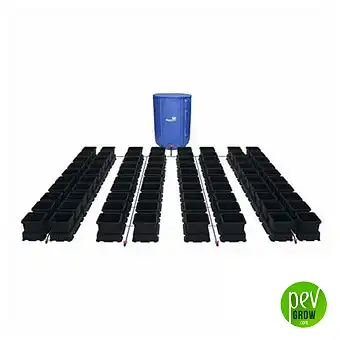
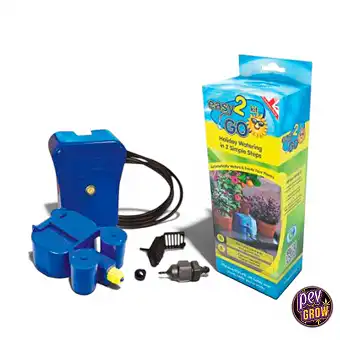
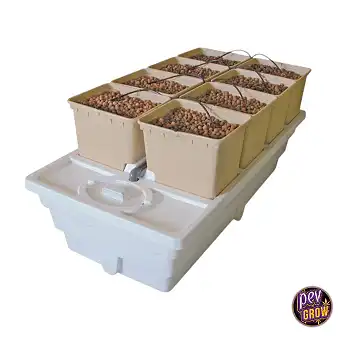
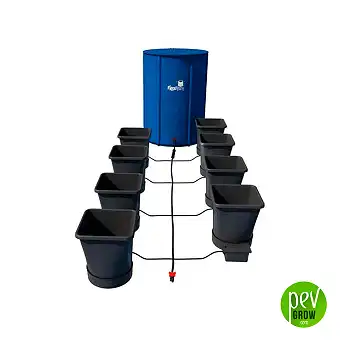
- Gravity Systems (Passive): The kings of convenience. Systems like the famous Autopot rely on gravity and a smart valve (AquaValve) to feed the plants only when they are thirsty. No pumps, no timers, no electricity. Perfect if you want a silent grow or if you travel often.
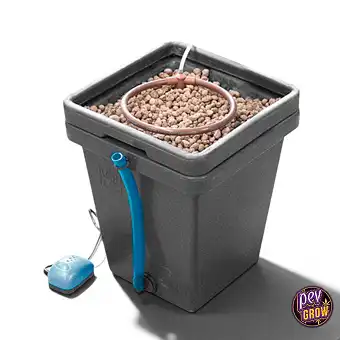
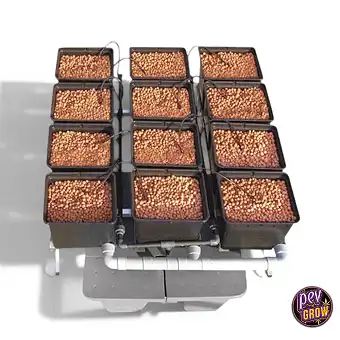
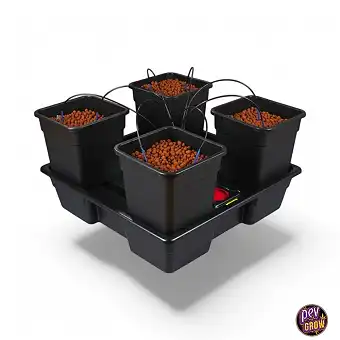
- Active Drip/Recirculating Systems: These use a water pump to push the nutrient solution from a reservoir to the plants (like the Origin/Wilma systems). The excess water drains back into the tank (recirculating) or is discarded (drain-to-waste). These offer incredible control and usually faster growth rates because of the constant fresh nutrient delivery.
How to Choose the Right Model for Your Space
Don't just buy the biggest tank you see. Size matters, but efficiency matters more. If you are growing in a small tent (e.g., 1x1m), a 4-pot system is likely enough to fill the canopy if you veg them properly. Cramming 20 plants in a small space with a hydro setup can turn into a jungle that's impossible to manage.
Check the reservoir capacity too. A larger tank offers more pH stability and means you have to refill it less often. Also, consider your lighting. Hydro plants grow fast and drink a lot, so ensure your electronic ballasts and lamps are powerful enough to fuel that explosive photosynthesis. If you match the light to the root system's potential, you are looking at gram-per-watt yields easily.
Frequently Asked Questions About Hydro Kits
Is hydroponics really faster than soil?
Yes, significantly. Without the resistance of soil, roots expand much faster, and the constant availability of nutrients allows the plant to focus entirely on vegetative and floral growth. You can often shave a week or two off the veg time.
Do these kits include the growing medium?
Most hardware kits include the tank, trays, pots, pumps, and tubes. The growing medium (like clay pebbles, coco coir, or rockwool) is usually sold separately because it's bulky and depends on your preference.
Is it difficult to maintain the water?
It requires a routine. You need to check pH and EC (nutrient concentration) daily or every other day. You should also change the water in the reservoir every 1-2 weeks to keep it fresh and free of pathogens.
What happens if the power goes out?
If you have a passive system like Autopot, nothing happens; it keeps working! In active systems with pumps, a short outage isn't a disaster, but the roots shouldn't dry out completely. The medium (clay/coco) usually holds enough moisture to keep them safe for a while.
Among all of you who comment or send us your questions there will be a bimonthly draw for a 50 euros voucher to buy in Pevgrow. What are you waiting for? Write now and participate!