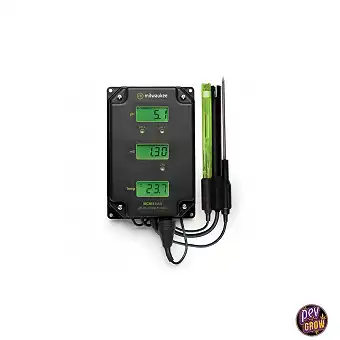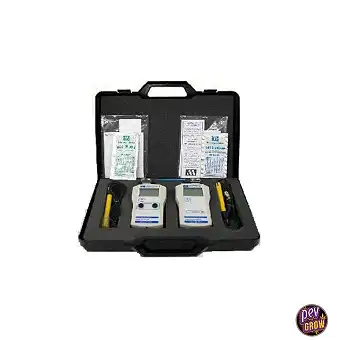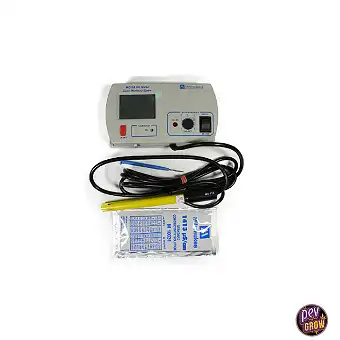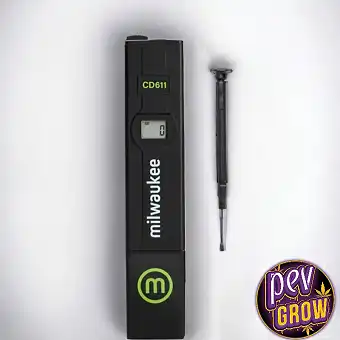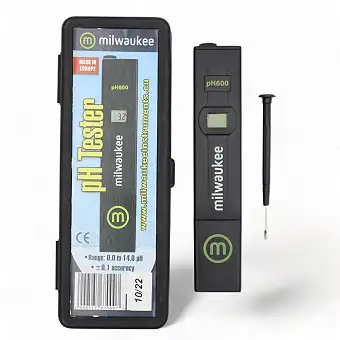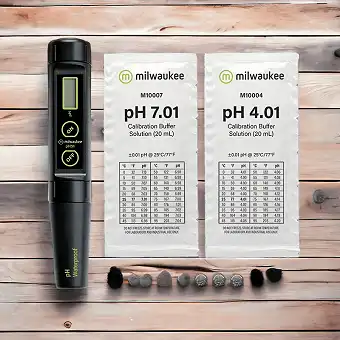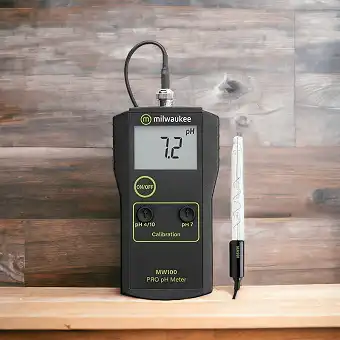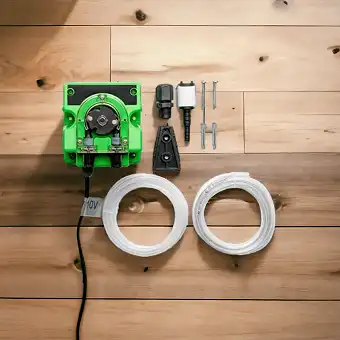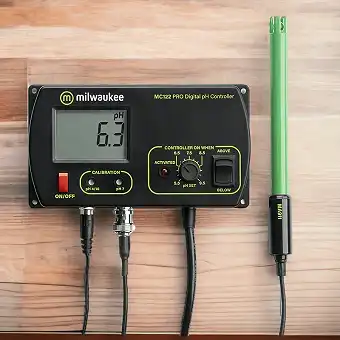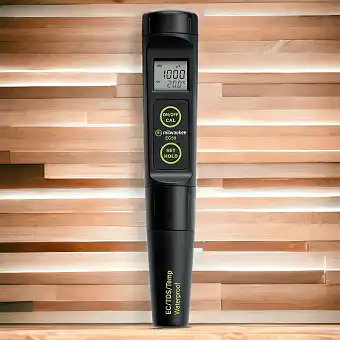
Milwaukee measuring instruments
Milwaukee measuring instruments have become a standard among growers seeking to accurately control temperature, humidity, pH, and EC in their marijuana crops. Their combination of reliability, ease of use, and excellent value for money makes them ideal for both beginners and professional grow rooms.
In Pevgrow, you can integrate Milwaukee meters for pH and EC within the category of measurement instruments for cultivation, alongside thermohygrometers, calibration solutions, and climate control. Below, you will see how to make the most of them to avoid nutrient blockages, environmental stress, and production losses.
Milwaukee Measurement Instruments: the technical brain of your cultivation
In a serious weed cultivation, “going by eye” is no longer valid: measuring is the only way to make accurate decisions. The Milwaukee measurement instruments are designed precisely for that, to give you reliable data on pH, EC, temperature, and humidity so that each watering or adjustment is based on numbers and not on intuitions. Within Pevgrow, you will find the entire family of specialized meters in the section of temperature, humidity, pH, and EC meters, where the key devices to control your cultivation from start to finish are grouped.
The Milwaukee brand has been a reference in pH and EC meters for agriculture, hydroponics, and cannabis cultivation for years, thanks to robust equipment, quick reading, and easy calibration. For a modern indoor setup, this type of technology is as important as good lighting or quality fertilizer: without precise measurement, the rest of the system is flying blind.
What each Milwaukee instrument controls in weed cultivation
A good control plan starts by understanding what each tool measures and why it is so important:
1. Milwaukee pH Meters
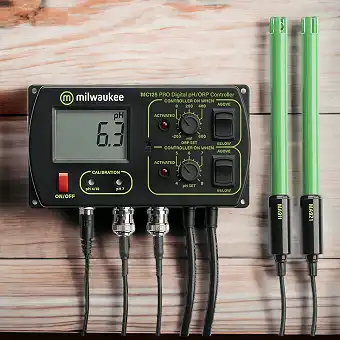
The pH of the water and nutrient solution determines which nutrients are actually available to the roots. An incorrect value, even if you use the best fertilizer, causes blockages and deficiencies. With Milwaukee pH meters, you can always adjust the watering to the optimal range according to the medium (soil, coco, hydro) and the phase of cultivation. If you want to expand your equipment or compare other models, you can visit the category of pH meters, where specific options to control the acidity of the watering and reservoirs are concentrated.
2. Milwaukee EC Meters
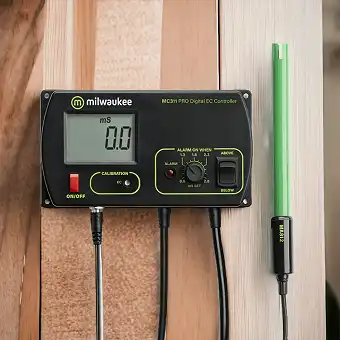
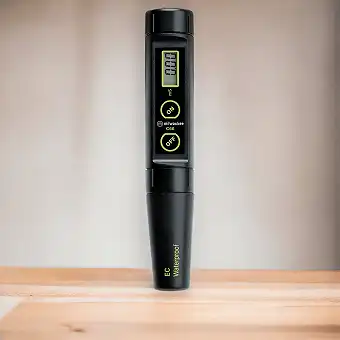
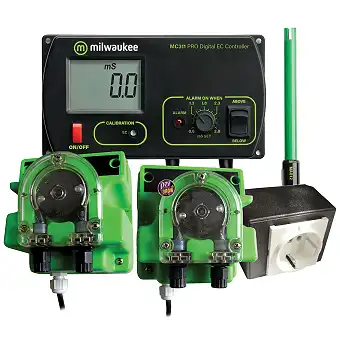
The electrical conductivity (EC) indicates the amount of dissolved salts in the water, that is, the actual concentration of nutrients that your plants receive. A Milwaukee EC meter allows you to know if you are fertilizing below what is necessary (“hungry” plants) or above (risk of over-fertilization and burns). In Pevgrow, you have a section dedicated to this type of meter within EC meters, where you will see different formats and working ranges for all types of cultivation systems.
3. Temperature and Humidity Meters
The environmental part of the cultivation is controlled with thermohygrometers, essential to avoid heat stress, the appearance of fungi, and drying problems. Although Milwaukee specializes mainly in pH and EC, its instruments fit perfectly alongside the temperature and humidity meters that you will find in the category of thermohygrometers. With them, you can record maximums and minimums and adjust heating, ventilation, and dehumidification according to the needs of each phase.
Advantages of Milwaukee measurement instruments over other meters
Choosing Milwaukee measurement instruments for your indoor cultivation has a series of very clear advantages:
- Precision and stability: their pH and EC meters are designed for professional use, with wide ranges and sufficient resolution to work with concentrated nutrient solutions without losing reliability.
- Easy calibration: the calibration buttons and stability indicators make it easy to keep your equipment always on point, which is key if you water daily or work with large reservoirs.
- Robust construction: these are instruments designed for real cultivation environments, with humidity, splashes, and constant temperature changes.
- Quality-price ratio: Milwaukee is positioned at a very interesting midpoint: results close to “top” ranges with a cost manageable for most home and professional growers.
- Wide compatibility: their meters work without problems with standard calibration solutions on the market, which facilitates long-term maintenance.
By combining Milwaukee pH and EC meters with a good thermohygrometer and environmental controllers, you complete the “technical brain” of your indoor: you know what is happening in the water, in the substrate, and in the air, and you can react before problems show up on the leaves.
How to integrate Milwaukee instruments into your indoor cultivation kit
A very common mistake is to buy a meter “because you have to have it,” but without integrating it into a clear routine. To make the most of your Milwaukee measurement instruments, I recommend this practical sequence:
- Before preparing the solution: measure the pH and EC of the starting water with your Milwaukee meters. This way, you will know how hard the water is and if it carries many salts.
- After adding fertilizers: measure EC again to check that you are within the range recommended by the nutrient manufacturer, adjusting if necessary.
- Final pH adjustment: use the Milwaukee pH meter to leave the solution at the ideal point (e.g., 5.8–6.2 in coco/hydro, 6.2–6.5 in soil).
- Daily environmental control: record temperature and humidity with your thermohygrometer at various times of the day; this way, you will detect heat spikes or excess humidity.
- Drainage monitoring: measure pH and EC of the drainage in pot cultivation to know if the substrate is saturating or if the plant is consuming more than you are providing.
If you also combine your measurement system with the use of small electric heaters, you can stabilize the temperature of the indoor during the coldest hours, making your instrument readings make sense within a constant and controlled climate.
Maintenance and calibration of Milwaukee meters
There is no point in having a Milwaukee pH meter of professional range if you never calibrate it or keep it dry. Maintenance is simple but essential:
- Always rinse the probe with clean water (preferably distilled) after each use.
- Store the pH probes in maintenance solution or following the manufacturer's instructions, never in pure distilled water.
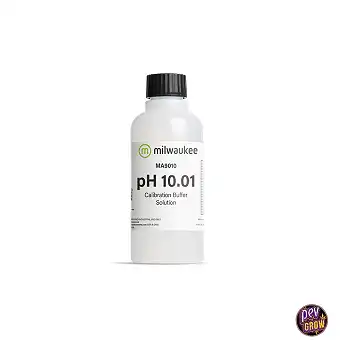
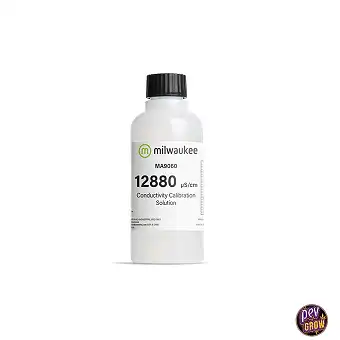
- Calibrate regularly (every 2–4 weeks with intensive use) using pH 4.01 and 7.01 solutions and specific EC buffer.
- Avoid impacts and extreme temperatures that could damage the electrode or electronics.
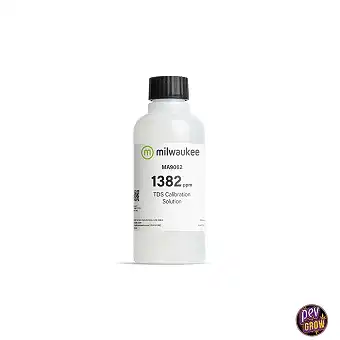
In Pevgrow, you have a specific section of calibration measurement instruments where you will find buffer solutions, cleaning and maintenance liquids so that your Milwaukee measurement instruments remain precise for years.
FAQ – Milwaukee Measurement Instruments
Are Milwaukee measurement instruments suitable for beginners?
Yes. Although Milwaukee measurement instruments are professional level, their use is very intuitive: clear screen, few buttons, and guided calibration. This makes them perfect for those who are starting but do not want to waste money on unreliable meters that end up failing halfway through cultivation.
What is the difference between a cheap Milwaukee meter and a more advanced one?
The basic models of Milwaukee pH and EC meters offer sufficient precision for most home cultivations, while the advanced ones add advantages such as waterproofing, automatic temperature compensation, expanded ranges, or replaceable probes. The choice depends on the size of your cultivation and how often you will use the equipment.
How often should I calibrate my Milwaukee meters?
It depends on usage, but as a reference, a cultivation that waters daily should calibrate at least once a month. If you notice unstable or inconsistent readings, advance the calibration. Using quality solutions and following the instructions prolongs the life of the electrode and keeps the meter adjusted.
Can I use the same calibration solutions for different brands of meters?
Yes, as long as they are standard pH and EC solutions, they are compatible with Milwaukee meters and most brands on the market. The important thing is to respect the indicated values (pH 4, pH 7, EC 1.413 mS/cm, etc.) and not to reuse the same liquid indefinitely, as it loses precision over time.
Are meters really necessary if I cultivate in “organic” soil?
Even in organic substrates, it is highly recommended to have pH and EC meters to control the watering water and detect problems before they appear as serious symptoms. Watering with spiked pH or a solution heavily loaded with salts can ruin an organic crop if not corrected in time.
Conclusion: if you don't measure it, you can't control it
Milwaukee measurement instruments are a basic piece in any weed cultivation that wants to move from “trial and error” to consistent results. Thanks to their pH, EC, temperature, and humidity meters, you can precisely adjust watering, nutrition, and climate, avoiding blockages, stress, and production losses that often translate into mediocre harvests.
If you seek reliability, ease of use, and an investment that truly makes a difference in the health of your plants, betting on Milwaukee meters for cultivation is a logical move. In Pevgrow, you will find everything necessary to set up a complete control system: pH and EC meters, thermohygrometers, calibration solutions, and climate control, so that every parameter of your indoor is always under control and your harvests are up to your effort.
Among all of you who comment or send us your questions there will be a bimonthly draw for a 50 euros voucher to buy in Pevgrow. What are you waiting for? Write now and participate!