Contact us
 +34 722 619 284


 Español
 Français
 Deutsch
 Italiano
 Português PT
 Română
 Polski
 Nynorsk
 Українська
 Nederlands
 Svenska
 Čeština
 български език
 ελληνικά
 Magyar
 Eesti keel
 Slovenščina
 Latviešu valoda
 Català
 Galego
 Euskera
 Русский
Grow Light Timers
Automating your indoor garden isn't just a luxury, it's a necessity for consistent results. Here you'll find the most reliable analog and digital timers to control your plants' photoperiod without lifting a finger. Keep your grow room running like clockwork.
 Play Text to Audio

The First Questions to Ask Before Buying a Timer
Look, nobody wants to be a slave to their grow tent, waking up at 6 AM just to flip a switch. But before you grab the first timer you see, stop for a second. A buddy who knows their stuff would ask you: What exactly are you plugging in?
Are you running a small LED setup or a beastly array of high-intensity grow lights? This matters because the startup current (peak load) can fry a cheap timer if you aren't careful. Also, do you need minute-by-minute precision, or is a standard 15-minute interval enough? And finally, be honest: are you tech-savvy, or do you prefer a simple wheel you can physically turn?
Mechanical vs. Digital: Which One Fits Your Grow Tent?
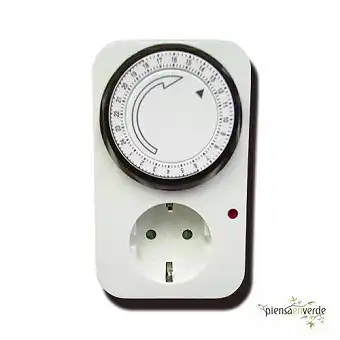
Based on what you need, the choice usually splits into two paths. If you are looking for something bulletproof and easy, the mechanical timer is your best friend. It works with a wheel of tabs—push them down for "on", pull them up for "off". It’s intuitive, rarely fails, and is perfect for the standard 18/6 or 12/12 cycles.
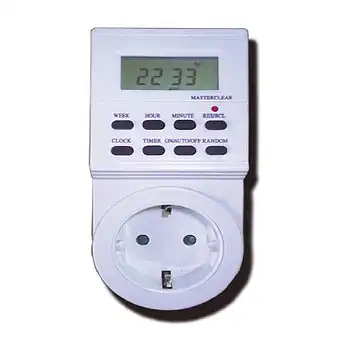
On the other hand, if you need to program different schedules for different days (maybe you want the lights off when your landlord visits on Tuesdays) or you need to control your air extraction system with surgical precision, a digital timer is the way to go. They have LCD screens, allow for multiple programs, and are completely silent.
Why Nailing the Photoperiod Changes Everything
Getting this category right isn't just about convenience; it's about protecting your harvest. Cannabis plants are incredibly sensitive to light leaks and irregular schedules. A timer that drifts or fails can stress your plants, leading to revegetation or even hermaphroditism.
By investing in a quality timer, you ensure your plants get exactly the rest and energy they need, day in and day out. Plus, once you have your lighting sorted, you might want to look into ways to automate your watering too, freeing up even more of your time.
The Safety Tip Most People Learn the Hard Way
Here is a piece of honest advice you don't always see on product pages: Watch out for the amperage. Standard timers are rated for a certain resistive load, but grow lights (especially HPS and MH) are inductive loads. They pull a massive spike of power when they ignite.
If you plug too many lights into one standard timer, the internal contacts can melt and fuse together, leaving your lights stuck on 24/7 (a disaster for flowering plants). If you are running high-wattage gear, always check the timer's max load or use a contactor box to be safe.
Frequently Asked Questions About Grow Timers
Can I use a standard timer for my grow lights?
Yes, as long as the total wattage of your lights does not exceed the timer's capacity. For most home growers with one or two lamps, a standard high-quality timer like the ones from Cornwall Electronics works perfectly.
What happens if the power goes out?
If you have a mechanical timer, it will stop turning while the power is out, so when it comes back on, your schedule will be delayed by the duration of the outage. Digital timers often have a small internal battery to keep the time and settings saved, so they resume the correct schedule once power returns.
Is a mechanical timer noisy?
Mechanical timers do make a very faint ticking sound, similar to a wristwatch or a kitchen timer. It is usually negligible, but if you are sleeping in the same room as your grow tent and are very sensitive to noise, a digital timer is completely silent.
Among all of you who comment or send us your questions there will be a bimonthly draw for a 50 euros voucher to buy in Pevgrow. What are you waiting for? Write now and participate!