Contact us
 +34 722 619 284


 Español
 Français
 Deutsch
 Italiano
 Português PT
 Română
 Polski
 Nynorsk
 Українська
 Nederlands
 Svenska
 Čeština
 български език
 ελληνικά
 Magyar
 Eesti keel
 Slovenščina
 Latviešu valoda
 Català
 Galego
 Euskera
 Русский
 Türkçe
Rockwool Substrate & Cubes
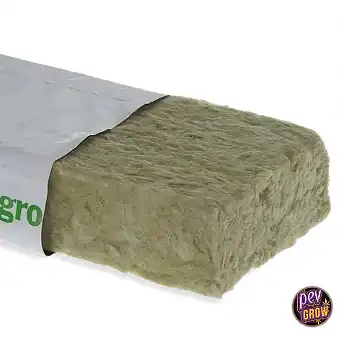
Maximize your hydroponic yields with our premium rockwool substrate. Whether you need cubes for cuttings, slabs for flowering, or plugs for germination, you'll find the sterile, high-performance medium professional growers trust for explosive root development.

 Play Text to Audio

Experience Professional Control Over Your Roots
You know that feeling when you walk into a professional grow room? Everything is clean, precise, and optimized. That’s exactly the vibe rockwool substrate brings to your setup. Unlike soil, which can be unpredictable, rockwool gives you a blank canvas, allowing you to control every single nutrient your plants absorb. It’s not just about growing; it’s about engineering the perfect harvest.
Imagine lifting a block and seeing a mass of bright white, healthy roots exploding out of the sides. That’s the result of the perfect air-to-water ratio this medium provides. If you are tired of soil-borne pests or inconsistent drainage slowing you down, switching to rockwool is the upgrade your indoor garden deserves. It’s the standard for high-yield hydroponics for a reason—it works.
From Germination to Harvest: A Cube for Every Stage
In this category, you won’t just find one type of block; we’ve curated a selection that covers your plant’s entire life cycle. Are you starting seeds or taking clones? Our small propagation plugs are designed to fit perfectly into standard trays, offering the stability your fragile new plants need. If you are used to peat pellets, you might want to compare them with our Jiffys, but remember that rockwool offers superior sterility and structure for hydro setups.
Once your babies are rooted, you can transplant them into larger growing cubes or blocks. These are perfect for the vegetative stage, allowing the root system to expand without shock. Finally, for the flowering stretch, we offer rockwool slabs. These are the heavy hitters for large-scale production, especially when paired with an automated Drip Irrigation Kit to keep them fed constantly.
Why Choose Rockwool? (The Unfair Advantage)
You might be wondering, "Is it really worth the switch?" The short answer is yes, especially if you crave speed and yield. Because rockwool is spun from molten basalt rock, it is completely sterile. This means no weed seeds, no pathogens, and no pests hitching a ride into your grow tent. You start with a clean slate every single time.
But the real magic lies in its structure. Rockwool holds a tremendous amount of water while still retaining plenty of air pockets. This oxygenation is key to preventing root rot and accelerating metabolic rates. Your plants can drink and breathe simultaneously, leading to vegetative growth speeds that soil simply can't match. However, since it's an inert medium, it has no nutrients of its own. This gives you total freedom to dial in your feeding schedule with precision fertilizers like Hydro A+B Plagron, ensuring your plants get exactly what they need, when they need it.
Expert Tips for Handling Rockwool Like a Pro
Working with this substrate requires a slightly different approach than traditional gardening. First and foremost: preparation is key. Rockwool has a naturally high pH (alkaline), so you must soak your cubes or slabs in pH-adjusted water (around 5.5) for 24 hours before using them. This stabilizes the medium and prevents nutrient lockout later on. To do this accurately, reliable PH meters are non-negotiable tools in your arsenal.
Another pro tip: never squeeze the cubes! When you squeeze rockwool to drain excess water, you crush the internal structure that holds those precious air pockets. Instead, just give them a gentle shake. Treat the medium with respect, and it will reward you with the healthiest root systems you've ever seen.
Frequently Asked Questions About Rockwool
Do I need to wash rockwool before use?
Yes, absolutely. As mentioned, you need to soak it in water with a pH of 5.5 to lower its natural alkalinity. This ensures that when you introduce nutrients, they remain available to the plant.
Can I reuse rockwool slabs or cubes?
Technically, you can, but for high-value crops like cannabis, it is not recommended. Reusing it increases the risk of pathogen accumulation and salt buildup. For the cost of a new slab, it’s better to start fresh and guarantee a problem-free grow.
Is rockwool safe to handle?
Rockwool fibers can be irritating to the skin and lungs if dry dust is inhaled. It’s always a good idea to wear gloves and a mask when handling dry slabs or cubes. Once they are wet, there is no dust risk.
How often should I water rockwool?
Rockwool dries out faster than soil but holds water well. In a hydroponic setup, you might water multiple times a day. The key is to never let it dry out completely, but also ensure you have runoff to prevent salt buildup.
Among all of you who comment or send us your questions there will be a bimonthly draw for a 50 euros voucher to buy in Pevgrow. What are you waiting for? Write now and participate!