Contact us
 +34 722 619 284


 Español
 Français
 Deutsch
 Italiano
 Português PT
 Română
 Polski
 Nynorsk
 Українська
 Nederlands
 Svenska
 Čeština
 български език
 ελληνικά
 Magyar
 Eesti keel
 Slovenščina
 Latviešu valoda
 Català
 Galego
 Euskera
 Русский
 Türkçe
Drip Irrigation Kits
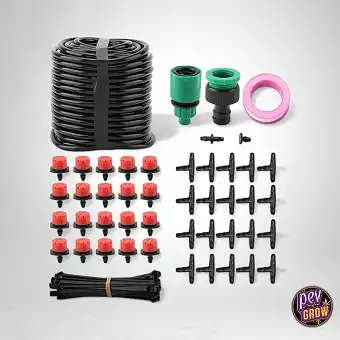
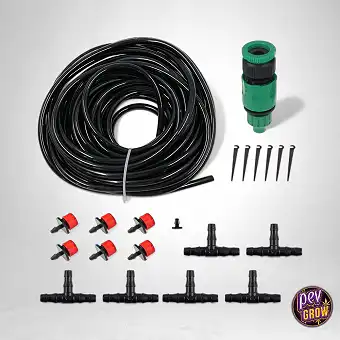
Looking for total freedom in your grow room? Our **drip irrigation kits** are the ultimate solution to keep your plants hydrated with surgical precision. Whether you're running a stealthy indoor tent or a massive outdoor crop, these systems save you work, water, and stress. Stop being a slave to the watering can and let technology help you fatten up those buds while you chill.
 Play Text to Audio

Questions I’d Ask Before You Buy a Watering System
Look, before you throw the first kit you see into the cart, we need to get real for a second. As your grower buddy, I wouldn't let you spend a dime without knowing exactly what your setup looks like. Choosing the right irrigation system isn't just about convenience; it's about matching the gear to your lifestyle and your plants' needs.
First off, where are you growing? An indoor tent has different humidity constraints than an outdoor garden. Second, how many plants are we talking about? Feeding four plants by hand is a ritual; feeding fifty is a workout. And crucially, what’s your water source? Do you have a tap nearby, or are you relying on a reservoir? These answers determine whether you need a simple gravity-fed system or a pressurized pump setup. Getting this clear now saves you from a flooded room or thirsty plants later.
Which Kit Fits Your Grow Op?
Alright, now that you've got your specs in mind, let's match you with the right gear. If you are running a small setup and want to keep things low-tech and quiet, a gravity-fed system is your best bet. It’s simple, effective, and doesn't require electricity, making it perfect for guerrilla grows or stealthy closets.
On the other hand, if you are looking for maximum precision and you're dealing with a larger number of square planters, you definitely want a system with a timer and a pump. This allows you to dial in the exact milliliters per plant, ensuring every single girl gets the same nutrient load. For those of you diving into high-performance cultivation, checking out a complete Hydroponic Grow Kit might be the next logical step if you want to leave soil behind entirely.
Why Automating Your Watering Changes Everything
Let’s be honest: the main reason we switch to drip irrigation is freedom. But the benefits go way deeper than just being able to go away for the weekend without hiring a babysitter for your plants. The real magic happens in the root zone. By delivering water slowly and consistently, you avoid the stress of the "drought and flood" cycle that happens with manual watering.
This constant moisture level allows the roots to absorb nutrients much more efficiently. Plus, you save a ton of water and nutrients because you aren't dumping liters that just run off the bottom. Speaking of nutrients, if you are automating, make sure you're using high-quality Fertilizer Kits that are soluble enough not to clog your lines. The result? Faster growth, healthier plants, and heavier harvests with half the effort.
Pro Tips for Drip Irrigation Success
Here is the stuff the manuals usually skip. First rule of the drip club: maintenance is key. Mineral salts and organic gunk love to clog drippers when you aren't looking. To avoid a disaster, run a cleaning solution or just plain warm water through the lines between cycles.
Also, never trust the reservoir blindly. Since the water sits there for a few days, the pH can drift. Always keep a PH calibration solution handy to ensure your meters are reading correctly before you mix a new batch. And finally, always set up a small tray or saucer under your pots, even with drip systems. It gives you a safety net in case a timer gets stuck or a dripper goes rogue.
Frequently Asked Questions About Drip Irrigation
Can I use organic fertilizers with drip systems?
Yes, but you have to be careful. Thick, molasses-based organics can clog the thin tubes and drippers. If you love organic growing, look for liquid organic lines specifically designed for irrigation systems or use a system with wider tubing to prevent blockages.
How often should I set the timer to water?
There is no magic number, as it depends on your temperature, plant size, and substrate. Start with short intervals (e.g., 15 minutes) once or twice a day and check the soil moisture. The goal is to keep the medium moist but not soaking wet.
Do I need a pump for all drip kits?
Not necessarily. Gravity systems work by placing the water tank higher than the plants, using physics to move the water. However, for larger setups or if you need precise timing, a pump is highly recommended to ensure even pressure for every plant.
Among all of you who comment or send us your questions there will be a bimonthly draw for a 50 euros voucher to buy in Pevgrow. What are you waiting for? Write now and participate!