Contact us
 +34 722 619 284


 Español
 Français
 Deutsch
 Italiano
 Português PT
 Română
 Polski
 Nynorsk
 Українська
 Nederlands
 Svenska
 Čeština
 български език
 ελληνικά
 Magyar
 Eesti keel
 Slovenščina
 Latviešu valoda
 Català
 Galego
 Euskera
 Русский
 Türkçe
LEC Grow Bulbs (CMH)
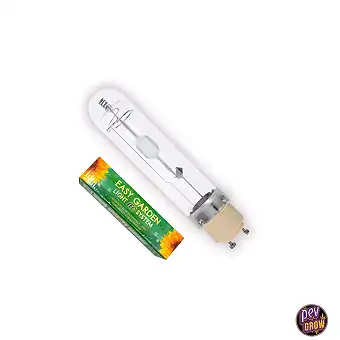
Discover the power of **LEC Bulbs** (Ceramic Metal Halide). These lamps offer a light spectrum closest to natural sunlight, including UV-B rays that boost trichome production. Ideal for growers looking to maximize quality and yield while keeping temperatures under control.

 Play Text to Audio

Why You Should Switch to LEC (CMH) Technology
If you are still running old-school lighting and fighting against high temperatures, it’s time for an upgrade. LEC bulbs, also known as CMH (Ceramic Metal Halide) or CDM, have revolutionized indoor growing for a reason. Unlike traditional HPS, these lamps provide a full light spectrum that mimics natural sunlight almost perfectly.
What does this mean for you? Your plants will receive UV-B rays, which triggers a natural defense mechanism: massive resin production. If you want sticky buds and a terpene profile that screams quality, this is the way to go. Plus, they produce more grams per watt and emit significantly less heat, making it easier to manage the climate inside your Mammoth grow tents.
How to Choose the Perfect CMH Bulb for Your Crop
Choosing the right bulb isn't just about picking a brand; it's about matching the light to your setup and your plants' life stage. Here is what you need to know to nail your purchase:
- Wattage: The most common standards are 315W and 630W. A single 315W bulb is roughly equivalent to a 600W HPS in terms of yield quality but with half the consumption. If you have a larger space, the 630W (often double-ended) is a beast.
- Color Temperature: You will usually find 3100K (or 3000K) and 4200K (or 4000K). The 3100K is ideal for the flowering phase, enhancing those dense buds. The 4200K is a mixed spectrum, perfect if you want to use the same bulb for both vegetative growth and blooming, or to keep mother plants healthy.
- Base Type: Make sure you check your reflector. Most 315W bulbs use a PGZ18 twist-lock base, while some 630W are double-ended.
Remember, these bulbs require specific LEC lighting fixtures or ballasts; you can't just screw them into a standard socket.
The Secret to Higher Quality Harvests
We know the struggle: you buy top-tier genetics, but the final result lacks that "punch." Often, the missing link is the light quality. By using LEC bulbs, you are essentially giving your feminized seeds a VIP treatment.
Because these lamps generate less radiant heat, you can place them closer to the canopy without burning the tips. This deep light penetration ensures that even the lower buds develop properly. Whether you are growing in soil or using advanced hydroponic and aeroponic systems, the stability and spectrum of CMH lamps will take your harvest to the next level.
Frequently Asked Questions About LEC Bulbs
How long do LEC bulbs last?
LEC bulbs have a longer lifespan than HPS. They can maintain up to 90% of their initial intensity for about 20,000 hours. However, for maximum yield, we recommend changing them every 4-5 crops.
Is a 315W LEC really equal to a 600W HPS?
In terms of yield weight, they are very close (often hitting 1.5 to 1.8 grams per watt with LEC). However, in terms of resin quality, terpene profile, and cannabinoid content, the 315W LEC usually outperforms the 600W HPS significantly.
Do LEC bulbs produce UV rays?
Yes! This is one of their biggest advantages. They produce UV-A and UV-B rays, which stress the plant slightly, forcing it to produce more trichomes to protect itself. Always wear protective eyewear when working under these lights.
Can I use an LEC bulb in an HPS reflector?
Not directly. The socket is different (PGZ18 vs E40). You can use an adapter socket, but you MUST use a specific LEC/CMH ballast. A standard magnetic or digital HPS ballast will not fire an LEC bulb correctly and could be dangerous.
Among all of you who comment or send us your questions there will be a bimonthly draw for a 50 euros voucher to buy in Pevgrow. What are you waiting for? Write now and participate!